
The Best Review and Approval Software: 17 Top Tools Compared
This website review and approval software comparison breaks down 17 tools by use case, features, and pricing, so you can pick the right fit fast.


In this blog post, we look at the 17 best review and approval tools on the market based on features, use cases, and pricing.
Introduction
If you've searched for review and approval software, you've probably seen a wide variety of results.
Some point you toward video editing tools, while others push document sign-off platforms or project management add-ons. None of them are wrong; they're just describing different corners of a much bigger category.
Picking review and approval software before you've worked out what you're actually reviewing – a website, a video, a PDF, or a stack of invoices – is how teams end up with a tool that handles half the job.
This guide breaks each category down properly, draws a clear line between approval software and bug tracking tools, and compares 17 tools so you can find the one built for the review workflow you actually run.
What is review and approval software?
Review and approval software is any tool that lets a team collect feedback on work in progress, route it to the right people, and record a formal approval or rejection before it goes live or moves to the next stage in the process.
Instead of scattered email threads, sign-off happens inside one system (often with several approval workflow software tools) with a clear audit trail of who approved what and when.
Whatever approval management software you’re using, the job is the same: turn scattered approval requests into a single, trackable approval flow.
Some terms undersell this category, such as "online proofing tools". Proofing usually means markup on a creative file or document.
Review and approval software is broader, covering document approval that has nothing to do with a creative asset at all, like invoice approvals, sales approvals, procurement requests, or a legal contract.
According to Monotype's Scaling Creative Operations Report, 57% of creative teams spend more than a quarter of their time on non-creative work such as compliance checks and workflow bottlenecks.
A structured approval process, with everyone using the same approval workflow tools and backed by automated workflows, is one of the more direct ways to claw back time, as it lets teams process approvals without chasing people down for a signature.
Types of review and approval software
Before comparing individual workflow approval tools, it helps to know which type you actually need.
- Website and web design review and approval software – Visual, pin-based feedback left directly on a live or staging site, so a client or QA tester can point at an issue instead of describing it in an email. This is Marker.io's category.
- Video review and approval software – Frame-accurate, time-coded commenting synced to an editor's timeline, built for post-production sign-off.
- File and document review and approval software – Markup and version comparison on PDFs, office documents, and creative files, with a formal approve or reject action.
- Creative review and approval software – Brand and marketing-creative sign-off, often routed through legal review or brand-compliance steps before a campaign goes out.
- Business workflow approval software – Non-creative approvals like invoice approvals, sales proposals, and procurement requests – usually a feature inside a broader project management or workflow automation software platform rather than a standalone product. These tools typically use dynamic request forms, capturing all the necessary details upfront, and approval rules to route each request for manager approval or final approval, supporting custom approval workflows and approval workflow automation for more complex processes.
- Client approval software – This type of approval workflow software ensures that there is a clear approval system for businesses to track approvals with their clients, whether they're reviewing videos, websites, documents, wireframes or something else.
Most teams only need one or two of these, which is why the "best" review and approval software depends entirely on what you're signing off on and who’s signing off on it.
17 best review and approval software tools in 2026
Here's how 17 review and approval software tools compare on features, pricing, and who they're actually built for.
1. Marker.io
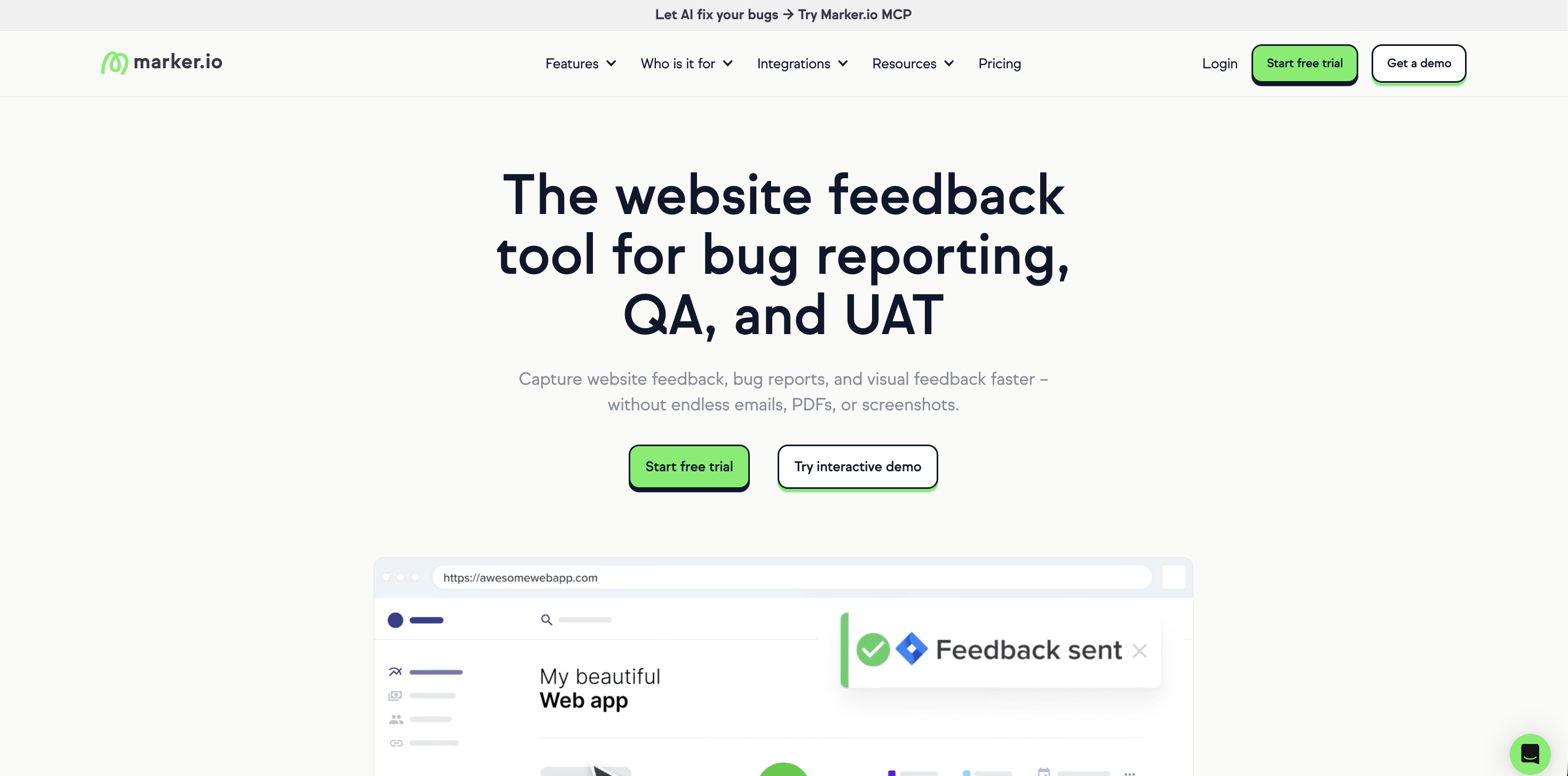
Collect client feedback directly into your PM tools for quicker action on bug reports and visual feedback.
Best for: Web development agencies, product and QA teams, enterprises collecting visual bug reports and feedback on live and staging websites, and teams running user acceptance testing.
Marker.io works as a lightweight browser extension or embedded widget. Reporters click to pin comments directly on a page, no account required, and Marker.io automatically captures the technical details a developer needs to fix the issue.
Key features:
- Click-to-pin visual feedback on any live or staging website, no login required for reporters
- Session replay showing the moments before a report was submitted
- Automatic capture of console logs, network requests, and environment metadata
- Two-way sync with Jira, Trello, Asana, GitHub, GitLab, ClickUp, and other project management tools
Pros: Reporters need no account to leave detailed feedback, and auto-captured technical data cuts the back and forth needed to reproduce a bug.
Cons: Built specifically for website and web-app feedback. Teams that need to review video or offline documents should consider other visual feedback tools.
Alternatives: Bugzilla, Jam.
Pricing: Starts at $39/mo (Starter, billed annually) for 3 users and up to 10 projects, up to $149/mo for Team, with custom pricing for the Business plan.
2. GoVisually
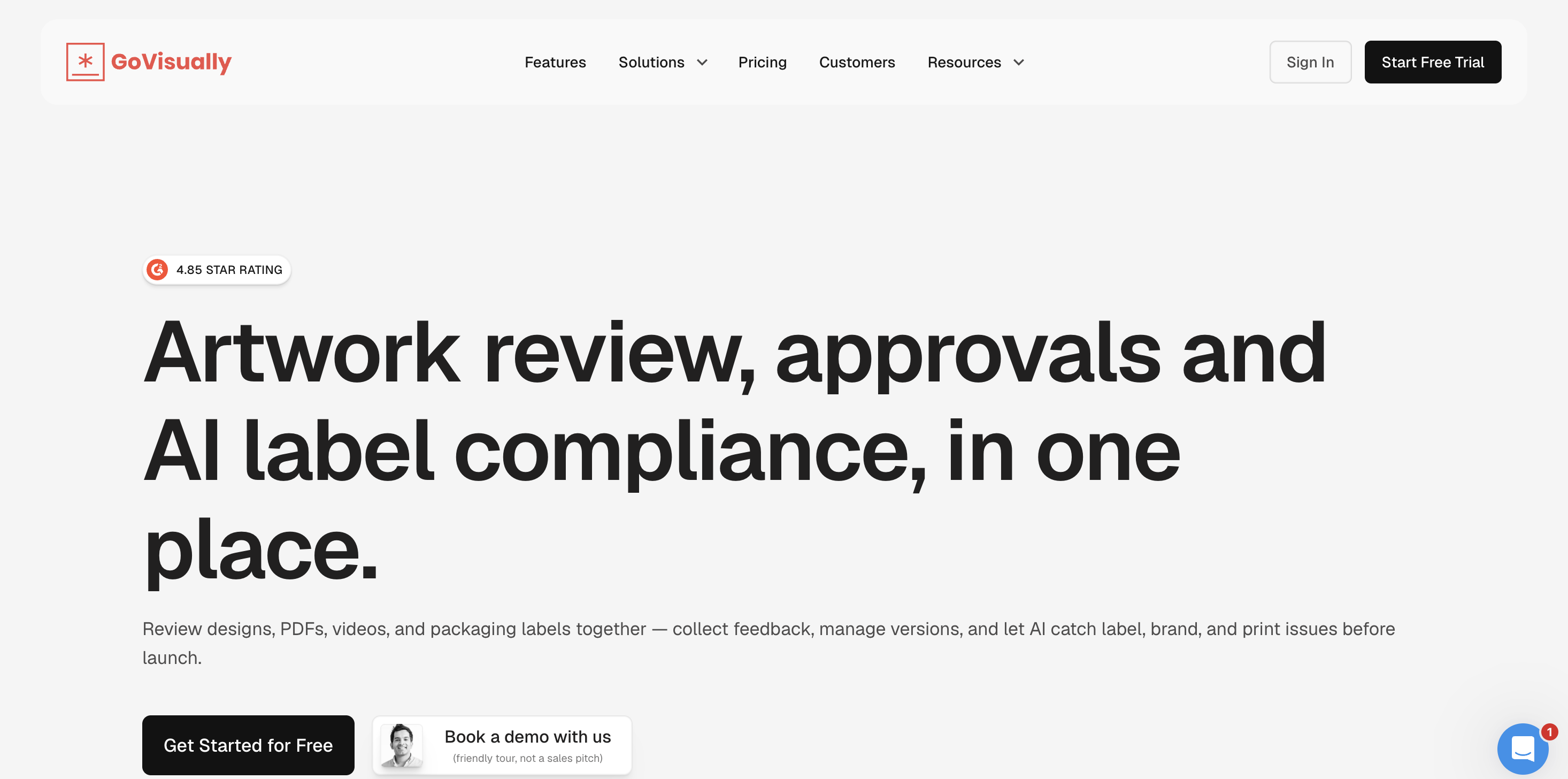
Online proofing tool to streamline the design feedback process for creative agencies.
Best for: Creative teams and CPG brands that need visual markup alongside label compliance checks.
GoVisually has shifted from a generic proofing tool toward AI-powered compliance checking for packaging and label reviews, on top of its core markup and approval workflow, making it unique among the design feedback tools on this list.
Key features:
- Visual markup and annotation on images, PDFs, and video
- One-click, automated approval workflows with automated notifications
- AI-powered label compliance checking for regulated CPG brands
Pros: Works across a wide range of asset types rather than just design mockups or video.
Cons: Per-user pricing gets expensive once a team has several projects running at once.
Alternatives: ReviewStudio, Marker.io.
Pricing: Starts at $16/user/mo (Lite, 1–5 users), with Pro from $33/user/mo.
3. ReviewStudio
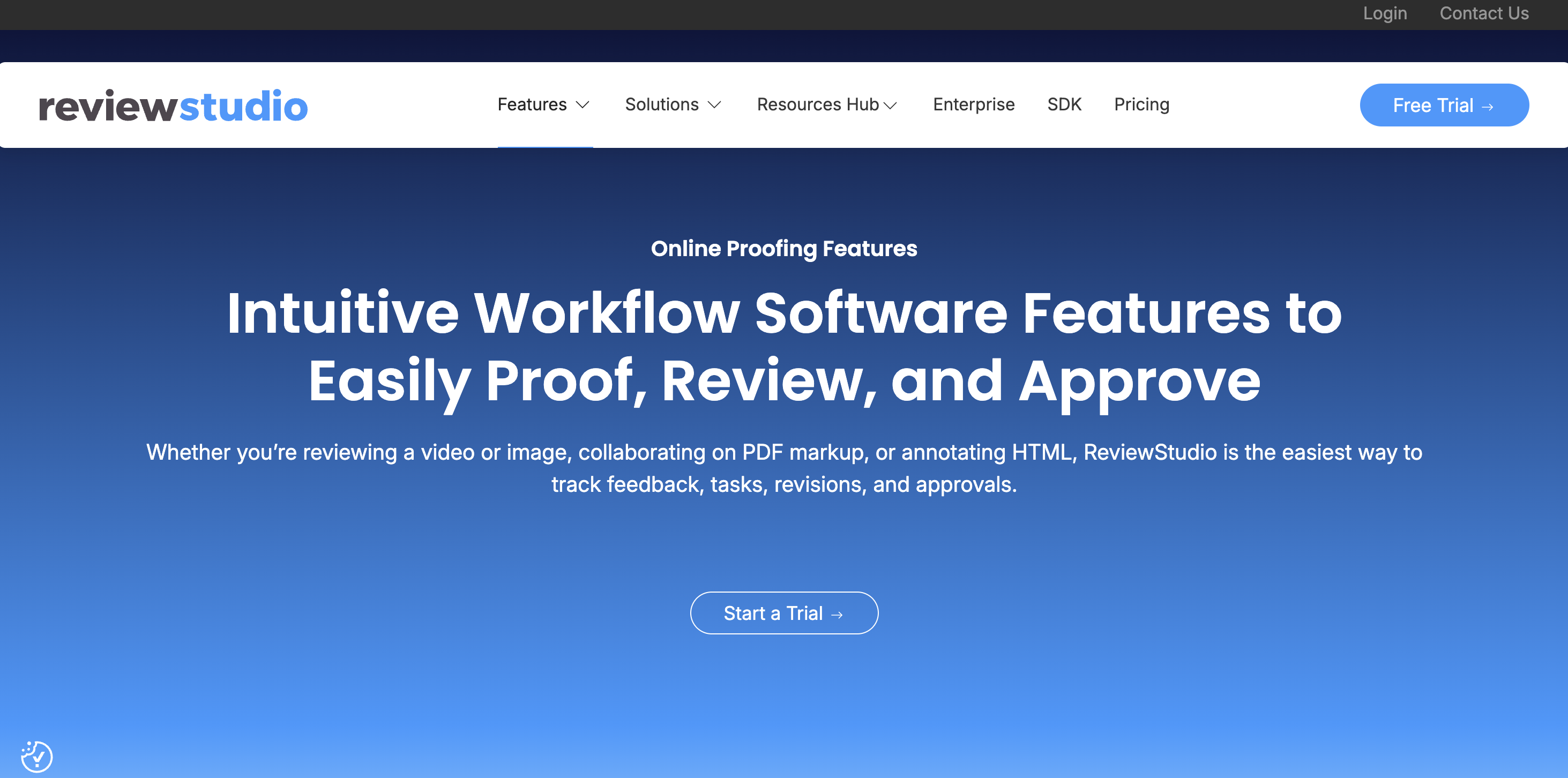
Facilitates synchronized feedback on visual media such as images, eBooks, and videos.
Best for: Creative teams and agencies reviewing design and video assets remotely.
ReviewStudio centralizes markup and version control across more than 100 file formats. The formal approval sign-off action is gated to its Advanced tier, so teams on the entry plans get commenting but not a true approval step.
Key features:
- Markup across images, PDFs, video, and websites
- Frame-accurate video proofing with looped playback
- Unlimited approval workflow templates with side-by-side version comparison
Pros: Broad file-format support makes it easy to review nearly anything in one place.
Cons: Formal approval buttons only appear on the Advanced plan and above.
Alternatives: GoVisually, Filestage.
Pricing: Starter is free, Pro starts at $12/user/mo, and Advanced starts at $25/user/mo (5-user minimum).
4. ProofHub
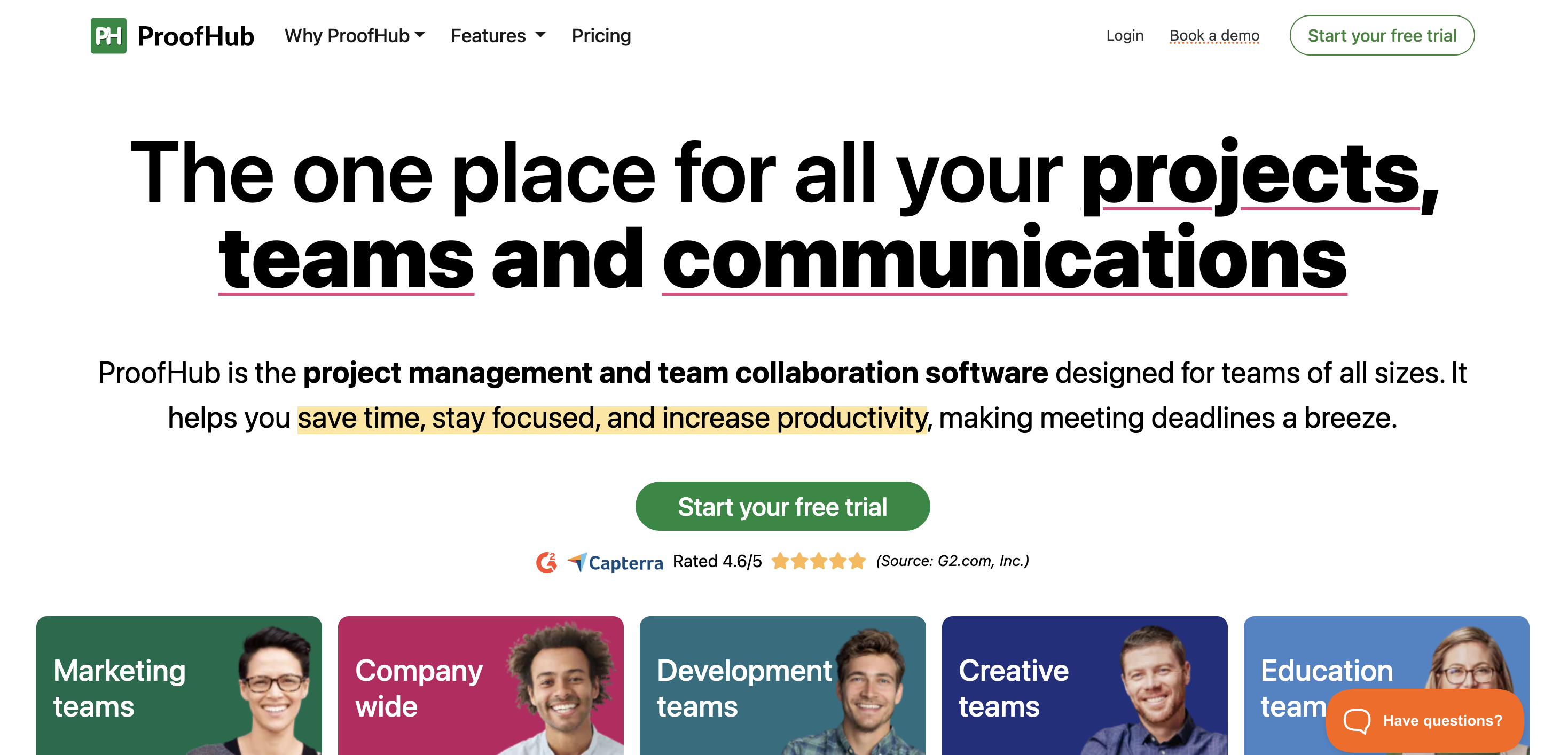
Combines project management with built-in features for review and approval.
Best for: Internal teams that want proofing and workflow management built into a full project management suite rather than a standalone review tool.
ProofHub bundles task management, deadline tracking, a drag-and-drop interface, and built-in chat alongside proofing, so approval sits inside the same workflow as everything else the team is managing.
Key features:
- Multiple project views, including board, table, and Gantt, to track progress on approval tasks
- Inline proofing comments with approval sign-off built into tasks
- Built-in chat to keep project communication in one place
Pros: Flat-rate pricing per account, not per user, so it scales well for larger teams.
Cons: Proofing is one feature among many, so it's a heavier tool than teams that only need review and approval.
Alternatives: Wrike, Asana.
Pricing: Starts at $45/mo (Essential, billed annually) with unlimited users, up to $135/mo for Ultimate Control.
5. Wipster

Specializes in video review, offering frame-accurate feedback.
Best for: Video-first review and approval for creative teams and agencies.
Wipster is an independent video review platform built around frame-accurate commenting and native integrations with editing software.
Key features:
- Frame-accurate video commenting
- Native integrations with Premiere Pro, Final Cut Pro, and After Effects
- Unlimited free external reviewers
Pros: Cost-effective compared to some other video review tools, with a straightforward setup.
Cons: Less flexible outside of video, since it isn't built for documents or images.
Alternatives: Frame.io, ReviewStudio.
Pricing: Starts at $9.95/mo (Light, billed annually), with Team at $19.95/user/mo.
6. Frame.io
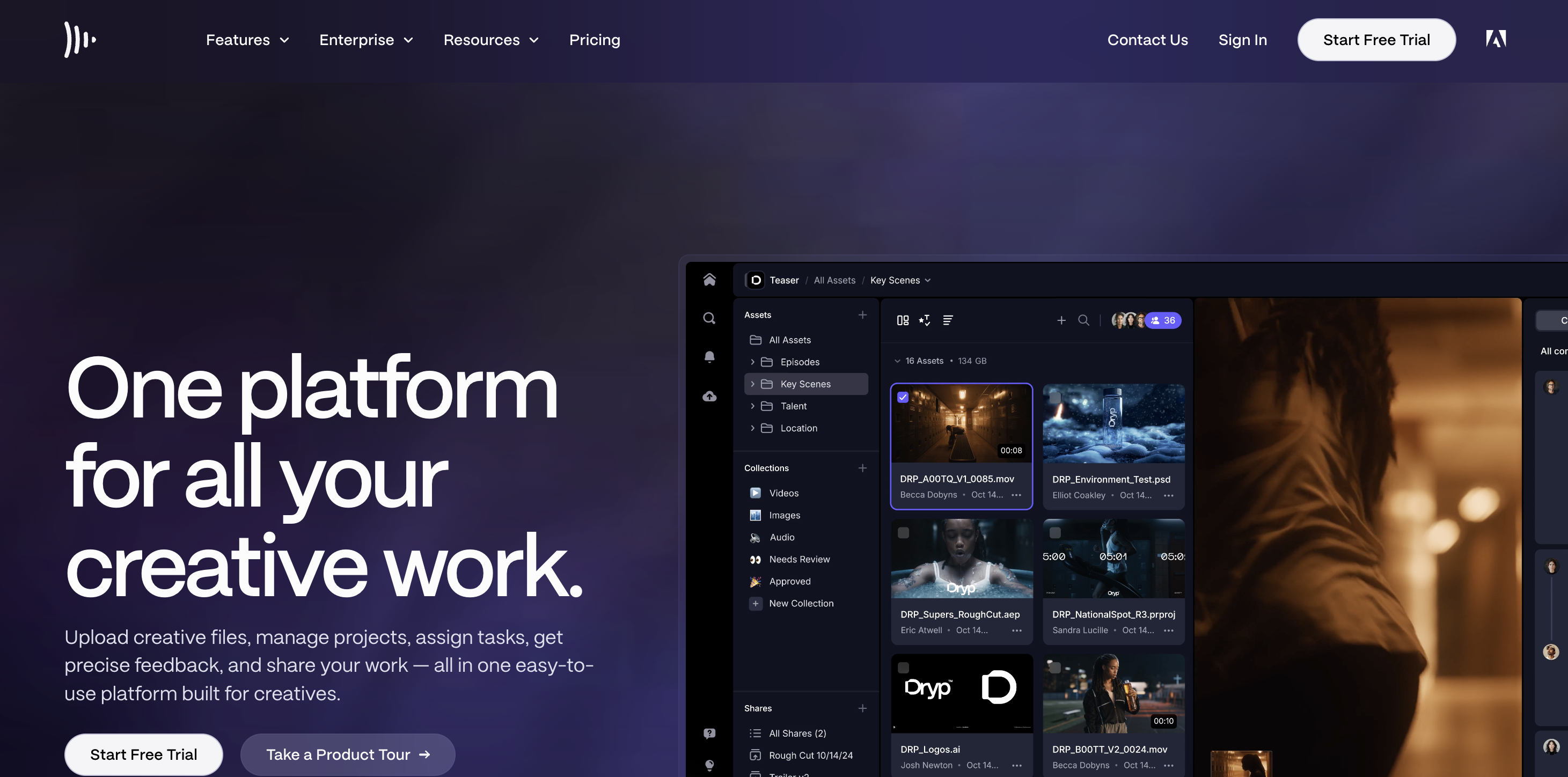
Video collaboration platform for post-production.
Best for: Video post-production teams and agencies already working in Adobe's ecosystem.
Frame.io, an Adobe product, runs on its V4 generation with a rebuilt player and Camera to Cloud capture for on-set ingestion.
Key features:
- Camera to Cloud capture ingestion
- Frame-accurate commenting across video, image, and PDF files
- Native integrations with Photoshop and Adobe Workfront
Pros: Tight integration with the rest of Adobe Creative Cloud for teams already using it.
Cons: The newer V4 interface has a learning curve for teams used to the older version.
Alternatives: Wipster, ReviewStudio.
Pricing: A free plan is available, with Pro from $15/user/mo and Team from $25/user/mo.
7. Filestage
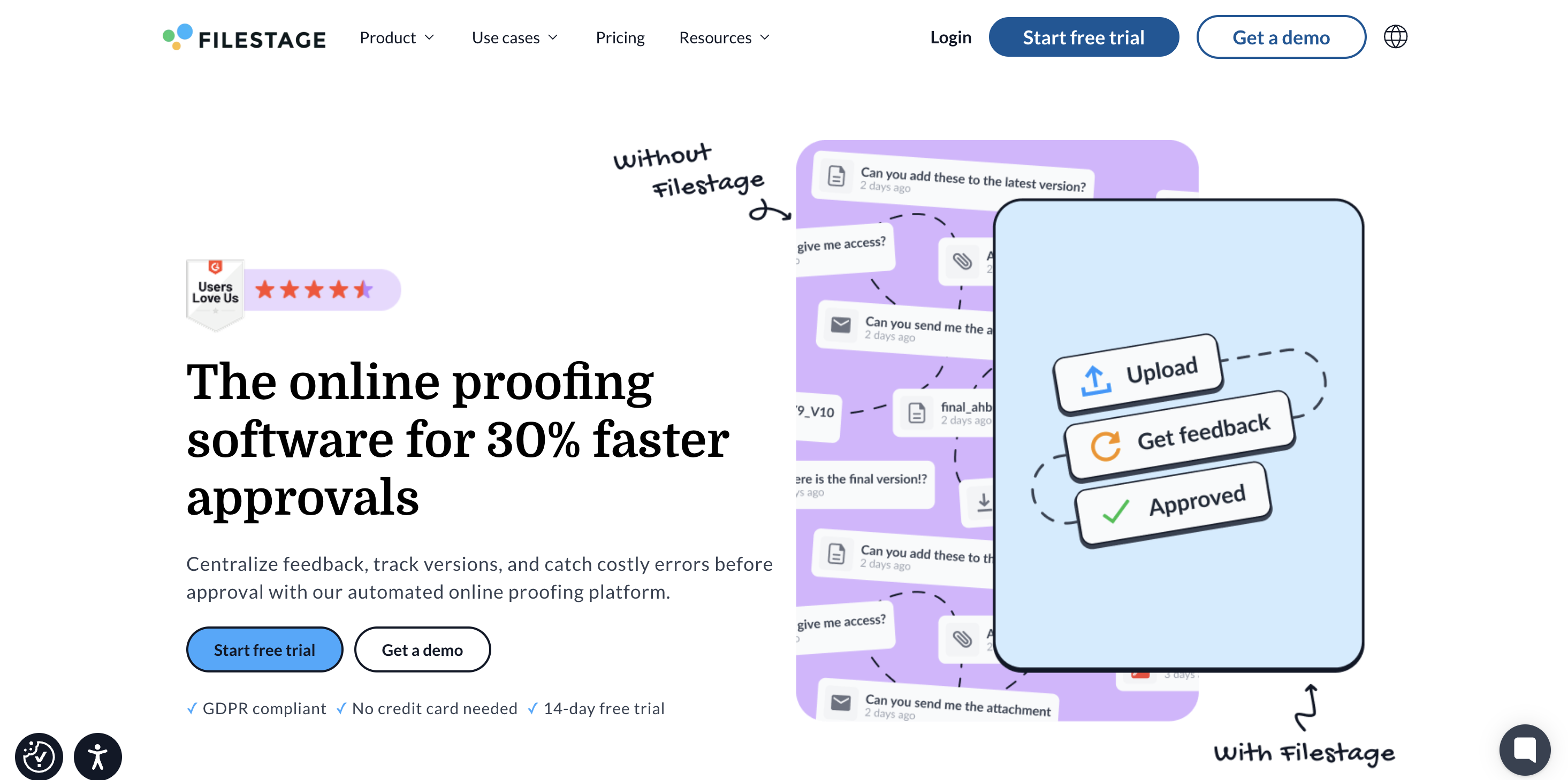
Streamlines the review and approval process for agencies.
Best for: Creative and regulated teams that need AI-assisted compliance checks alongside standard proofing.
Filestage's pricing has increased substantially since it was last reviewed, alongside a shift toward AI "review agents" that flag compliance issues automatically.
Key features:
- Version comparison across creative files and documents
- AI review agents for compliance checks and automations
- Webhook and API access for custom workflows
Pros: A strong fit for regulated industries thanks to detailed compliance and audit trail features.
Cons: Pricing is a significant step up from budget proofing tools, even on the entry paid plan.
Alternatives: Ziflow, ProofHub.
Pricing: A free plan is available, with Starter from €199/mo and Business from €329/mo.
8. Adobe Workfront
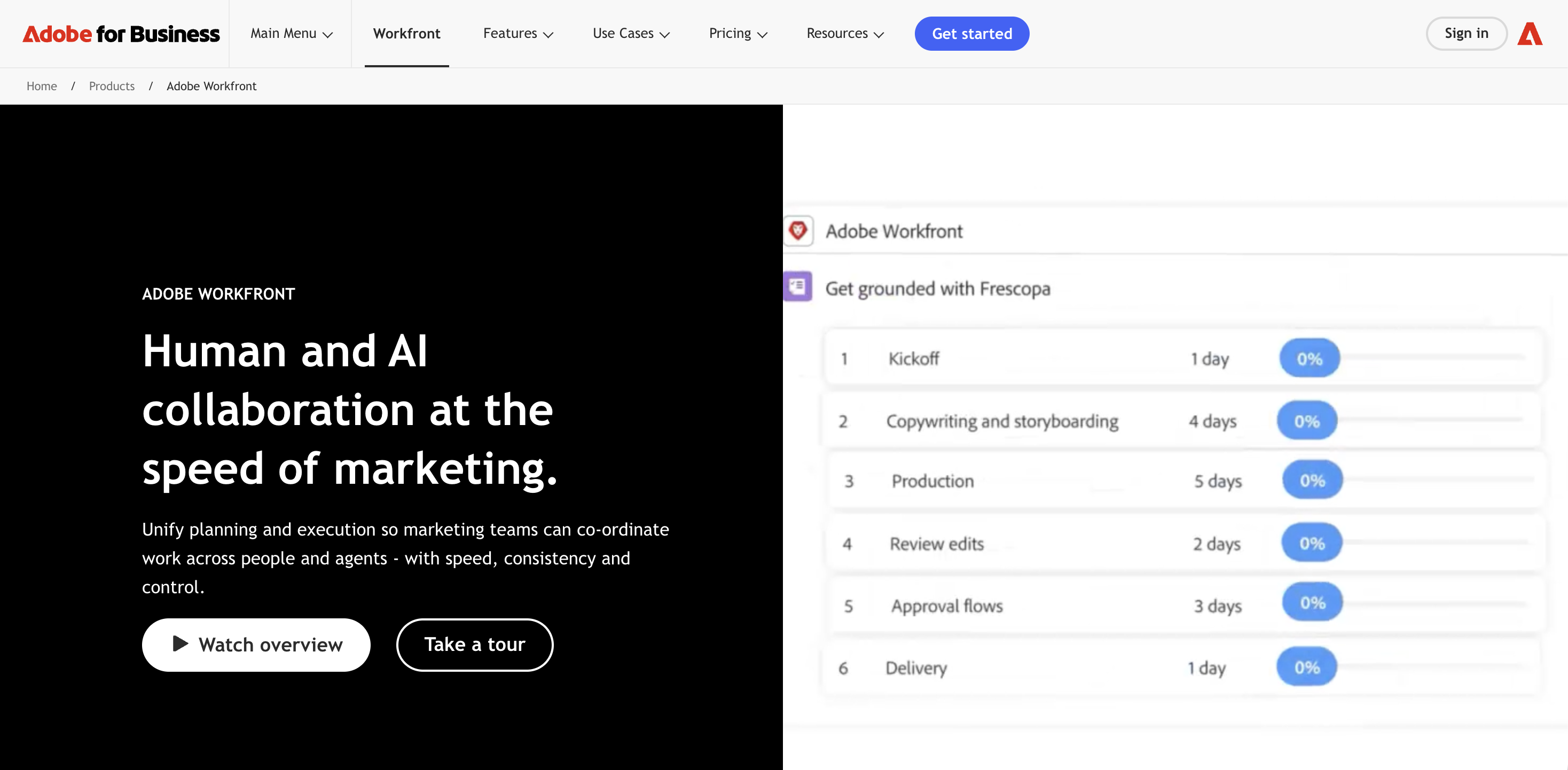
Comprehensive project management solution for enterprises.
Best for: Large enterprises already using other Adobe products that need proofing as part of broader work management.
Workfront folds proofing into a wider project and work management suite, with multi-stage approval routing and an AI reviewer that checks brand-standard compliance.
Key features:
- Multi-stage, dependent approval workflows
- Markup with simultaneous multi-user commenting across file types
- AI reviewer for automated brand-standard checks
- Microsoft Teams integration, so approvers can review and approve items without leaving Teams
Pros: Well suited to complex projects across multiple departments at enterprise scale.
Cons: Pricing isn't published and requires a sales conversation, and it's not as agile as lighter, standalone proofing tools.
Alternatives: Wrike, monday.com.
Pricing: Custom, enterprise-based pricing only.
9. Aproove
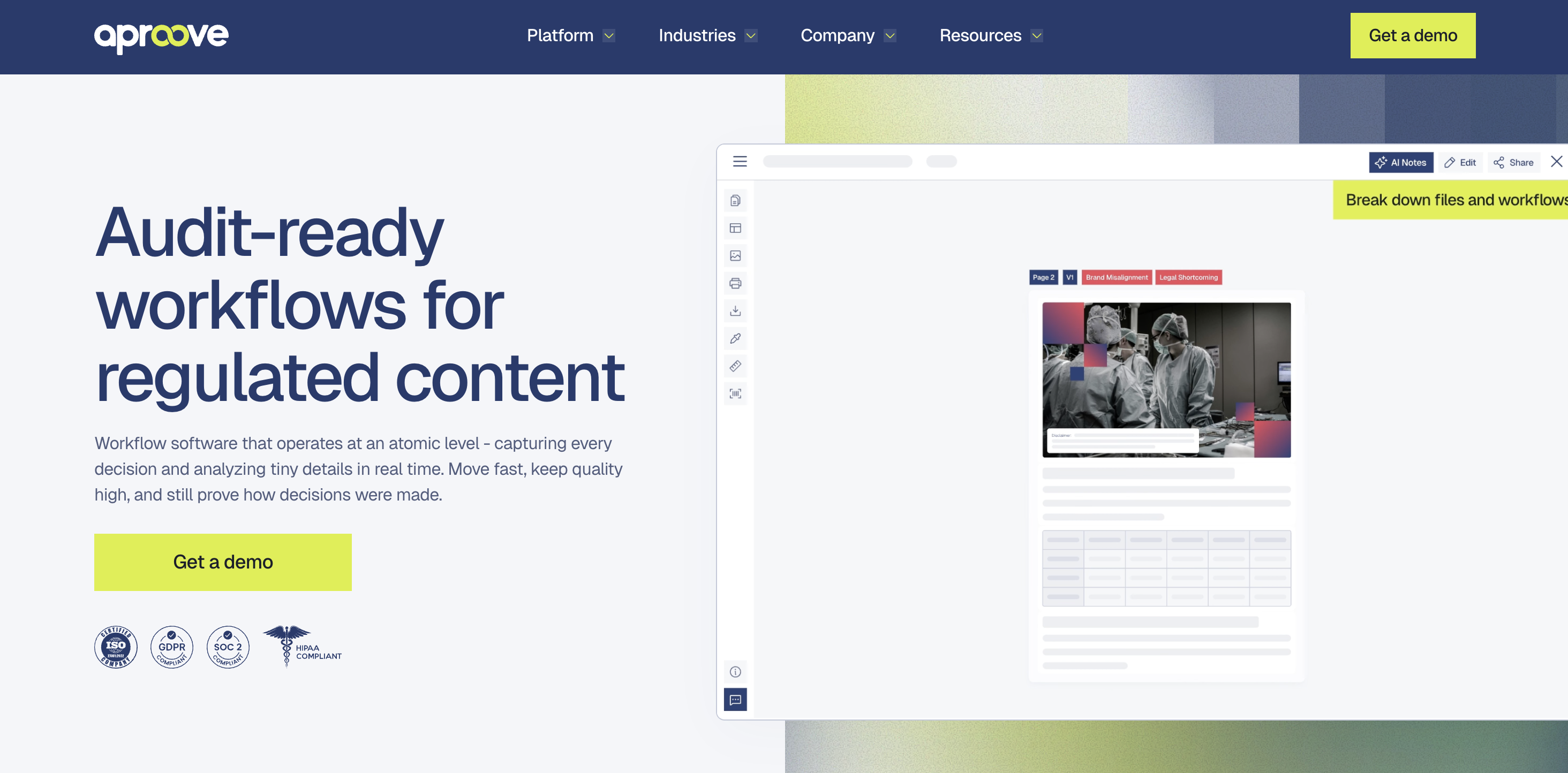
Streamline your creative process with a cloud-based collaboration and proofing tool.
Best for: Regulated industries, such as pharma and financial services, that need detailed, pixel-level file review and complex approvals across several teams.
Aproove has repositioned around compliance-first work management, with immutable audit trails and timestamped approver identity for high-risk environments that depend on secure collaboration with external stakeholders.
Key features:
- Pixel and component-level review across 150+ file formats
- Immutable, timestamped compliance audit trails
- Access control that lets external stakeholders join a review without a full system account
- AI review agents that flag risk for human sign-off
Pros: A good fit for organizations where an incomplete audit trail creates real regulatory risk.
Cons: More infrastructure than most small or mid-sized teams need.
Alternatives: Ziflow, ProofHub.
Pricing: Custom, quote-based pricing only.
10. Gain
Automated approval workflows specifically designed for social media content.
Best for: Teams approving any type of content, not just social media posts.
Gain has moved beyond its original social-media-only positioning and now markets itself as an approval platform for files, documents, video, and web content as well, fitting into a broader sales process or internal workflows just as easily as a marketing calendar.
Key features:
- Unlimited approval workflows across content types
- Native integration with major social platforms for scheduling
- Client-facing approval links that need no login
Pros: A straightforward way to get client sign-off without asking clients to create an account.
Cons: Less powerful than dedicated social media management tools if scheduling is the main need.
Alternatives: Planable, Buffer.
Pricing: Starts at $99/mo (Starter, billed annually).
11. Dropbox
Cloud storage platform perfect for straightforward file sharing and basic review.
Best for: Teams that want file sharing and version history alongside a lightweight video and creative review layer.
Dropbox's Replay feature adds live commenting and frame-accurate video review on top of its core file storage and sync.
Key features:
- Replay for video and creative asset review with live commenting
- Tiered version history, extendable as a paid add-on
- Branded, password-protected sharing links
Pros: A familiar, trusted platform for teams that already store files there.
Cons: Review tools are lighter than a dedicated proofing platform, and older version history rolls off without a paid add-on.
Alternatives: Google Drive, Box.
Pricing: A free Basic plan is available, with Plus from $11.99/mo and Professional from $19.99/mo.
12. Edoro
Streamlined approach to quick and efficient reviews of digital content.
Best for: Freelancers through agencies that want broad file-format support without email back-and-forth.
Edoro (formerly QuickReviewer) reviews more than 150 file types, including native Adobe files, video, and 3D models, with guest commenting that needs no account.
Key features:
- Support for 150+ file types, including native Adobe Creative Cloud files
- Frame-by-frame video comparison
- Guest commenting and approval with no account required
Pros: Strong value for the breadth of file formats supported, even on lower-cost plans.
Cons: Fewer third-party integrations than some competitors, which can mean workarounds under tight deadlines.
Alternatives: GoVisually, ReviewStudio.
Pricing: A Forever Free plan is available, with Pro from $79/mo and Premium from $169/mo.
13. Ziflow

Designed for organizations with intricate, multi-step review and approval processes.
Best for: Enterprise creative reviews involving multiple stakeholders and approval stages.
Ziflow's 2025 shift toward AI-assisted review, called ReviewAI, automatically checks proofs against brand and checklist compliance during the review process.
Key features:
- ReviewAI automation for brand and checklist compliance
- Unlimited proofs, reviewers, and review history on paid tiers
- Configurable, multi-stage approval templates and workflows
Pros: Built for genuinely complex, multi-stage reviews at scale.
Cons: Likely more features and higher costs than smaller teams or startups need.
Alternatives: Aproove, Filestage.
Pricing: A free Personal plan is available, with Starter from $199/mo and Business from $329/mo.
14. Google Docs

Real-time document editing and collaboration tool.
Best for: SEO and content teams that need free, real-time document review with clients or collaborators.
Google Docs comes bundled with every Google Workspace plan, with comment threads and version history covering most lightweight review needs for essential documents like briefs and proposals.
Key features:
- Real-time collaborative editing
- Comment threads directly on document text
- Built-in eSignature support on paid Workspace tiers
- Integrated into the full suite of Google products
Pros: A free, familiar tool for content and copy review that most collaborators already know how to use.
Cons: Lighter on approval workflow and audit trail features than a dedicated review and approval tool.
Alternatives: Notion, Microsoft Word.
Pricing: Included with Google Workspace, from $7/user/mo (Business Starter).
15. Filecamp
Digital asset management (DAM) system with light review and approval features.
Best for: Teams that want basic digital asset management with review and approval layered on top.
Filecamp combines asset storage with proofing, with drag and drop tools for uploading files, though the approval workflow itself is limited to its top-tier plan rather than available across the board.
Key features:
- Digital asset management and document management, with tagging and search
- Online proofing and approval workflow (Professional tier)
- Custom branding for client-facing review portals
Pros: Covers most of what a small team needs from a combined DAM and review tool.
Cons: The actual approval workflow is locked behind the most expensive plan.
Alternatives: Ziflow, Dropbox.
Pricing: Starts at $29/mo (Basic), up to $89/mo for Professional.
16. Loom
A video-based way to share feedback and notes.
Best for: Async, video-based feedback rather than a full review and approval platform.
Loom, now owned by Atlassian, is built for quick screen recordings and video comments rather than structured, multi-stage approval.
Key features:
- Video comments and reactions for async feedback
- Transcriptions and captions in 50+ languages
- Password-protected videos with viewer analytics
Pros: Cuts down on live meetings by letting people respond to feedback on their own time.
Cons: Not a full review platform, so it lacks version control and formal approval steps.
Alternatives: Wipster, Vimeo.
Pricing: A free Starter plan is available, with Business from $18/seat/mo.
17. Notion
Manage projects and creative teams with customizable tools and templates.
Best for: Content teams that want lightweight review and version history inside a broader workspace.
Notion isn't built specifically for review and approval, but its page history and permissions make it usable for business users who already manage projects there.
Key features:
- Page version history for an audit trail
- Granular database and page permissions
- Comment threads on any page or document
Pros: More flexible than a dedicated review tool if the team is already using Notion for project management.
Cons: No dedicated approval workflow or sign-off action, just comments and permissions.
Alternatives: Google Docs, ClickUp.
Pricing: A free plan is available, with Plus from $10/user/mo and Business from $20/user/mo.
Conclusion
Review and approval software enables you to approve assets, process invoice approvals, and secure final sign-off across websites, video, documents, creative assets, and business processes, all under one label, and the right pick depends entirely on which of those you're signing off on.
If your team is a web development agency or QA group collecting visual feedback and bug reports on live and staging sites, start a free trial of Marker.io to see how a tool built specifically for that job replaces scattered screenshots and email threads with feedback your developers can act on immediately.
Review and approval software FAQs
What is the best review and approval software?
There isn't one best review and approval software for every team, since the category covers different jobs.
Marker.io is built specifically for website and web-app feedback. For video, tools like Frame.io or Wipster fit better, and for documents or creative assets, ReviewStudio or Filestage are stronger picks.
The best approval workflow software, or best workflow approval software, is whichever tool matches what you're signing off on, since there's no single best approval software that covers every use case equally well. Start by identifying what you're reviewing, then choose from the tools built for that type.
How long does the approval process take?
How long approvals take depends on the number of stakeholders and approval steps involved, not just the software itself.
Dashboards that clearly flag pending approvals and outstanding approvals, paired with automated reminders, tend to move things along faster than tools where approvals happen only when someone remembers to check their inbox.
Simple, single-approver sign-off can happen the same day. Larger initiatives with several review stages or external stakeholders can take days or weeks, regardless of which review and approval software you use.
How much does review and approval software typically cost?
Pricing varies widely by category and scale. Standalone proofing and approval tools for creative teams often start somewhere between $10 and $50 per user or per month on entry plans, while enterprise-grade platforms with compliance and audit trail features are usually custom-quoted.
Tools that bundle approval into a broader project management or workspace platform, like Notion or Google Docs, often include it in a lower base subscription.
Can review and approval software integrate with project management tools?
Most dedicated review and approval tools integrate with common project management platforms, though the depth varies. Some, like Marker.io, offer two-way sync so status updates flow both directions automatically. Others only support one-way export or a Zapier-style connection, so it's worth checking integration depth directly rather than assuming every tool syncs the same way.
What should I do now?
Here are three ways you can continue your journey towards delivering bug-free websites:
Check out Marker.io and its features in action.
Read Next-Gen QA: How Companies Can Save Up To $125,000 A Year by adopting better bug reporting and resolution practices (no e-mail required).
Follow us on LinkedIn, YouTube, and X (Twitter) for bite-sized insights on all things QA testing, software development, bug resolution, and more.
Nathan Vander Heyden
Nathan is Head of Marketing at Marker.io. He used to work as a SEO consultant for various SaaS companies—today, he's all about helping Web Ops teams find more efficient ways to deliver bug-free websites.
Related blog posts

Get started now
Free 15-day trial • No credit card required • Cancel anytime